

Thumb sucking and lip biting in children are common self-soothing behaviors in early childhood, but when these habits continue past age four, they can start to influence dental growth, tooth alignment, and even speech development. Understanding the early warning signs helps parents step in before long-term issues appear.
In this guide, we outline the 7 key signs that indicate when the habit becomes concerning and the most effective, child-friendly strategies to help your child stop safely and confidently.
At Smile Care Center, we provide a tailored program to help children safely stop thumb sucking and lip biting while protecting healthy dental development. Book now or contact us on WhatsApp for a quick consultation.
What Are Thumb sucking and lip biting in children?
Thumb sucking and lip biting in children are self-soothing oral habits that many children develop during early childhood to feel secure, calm, or fall asleep.
These habits are generally normal in toddlers, but they may become concerning if they persist beyond age four. Understanding why children adopt these behaviors helps parents respond early and support healthy oral and facial development.
When Should Parents Be Concerned About These Habits?
Most children naturally outgrow thumb sucking and lip biting, but parents should start paying attention when these habits persist beyond age four. At this stage, the pressure exerted on the teeth, gums, and developing jaw can lead to noticeable changes.
Warning signs include shifts in tooth alignment, irritation of the lips or gums, or early speech difficulties. The risk increases with how often, how long, and how strongly the child performs the habit.
How Thumb Sucking and Lip Biting Affect Oral and Facial Development
When thumb sucking or lip biting continues for a long time, the constant pressure can gradually change how the teeth, jaw, and lips grow and function. The main effects include:
-
Changes in tooth alignment, such as protruded front teeth.
-
Development of an open bite or improper bite (malocclusion).
-
Narrowing of the upper palate and changes in jaw shape.
-
Difficulty with chewing or certain speech sounds.
-
Dryness, cracking, or irritation of the lips and surrounding tissues.
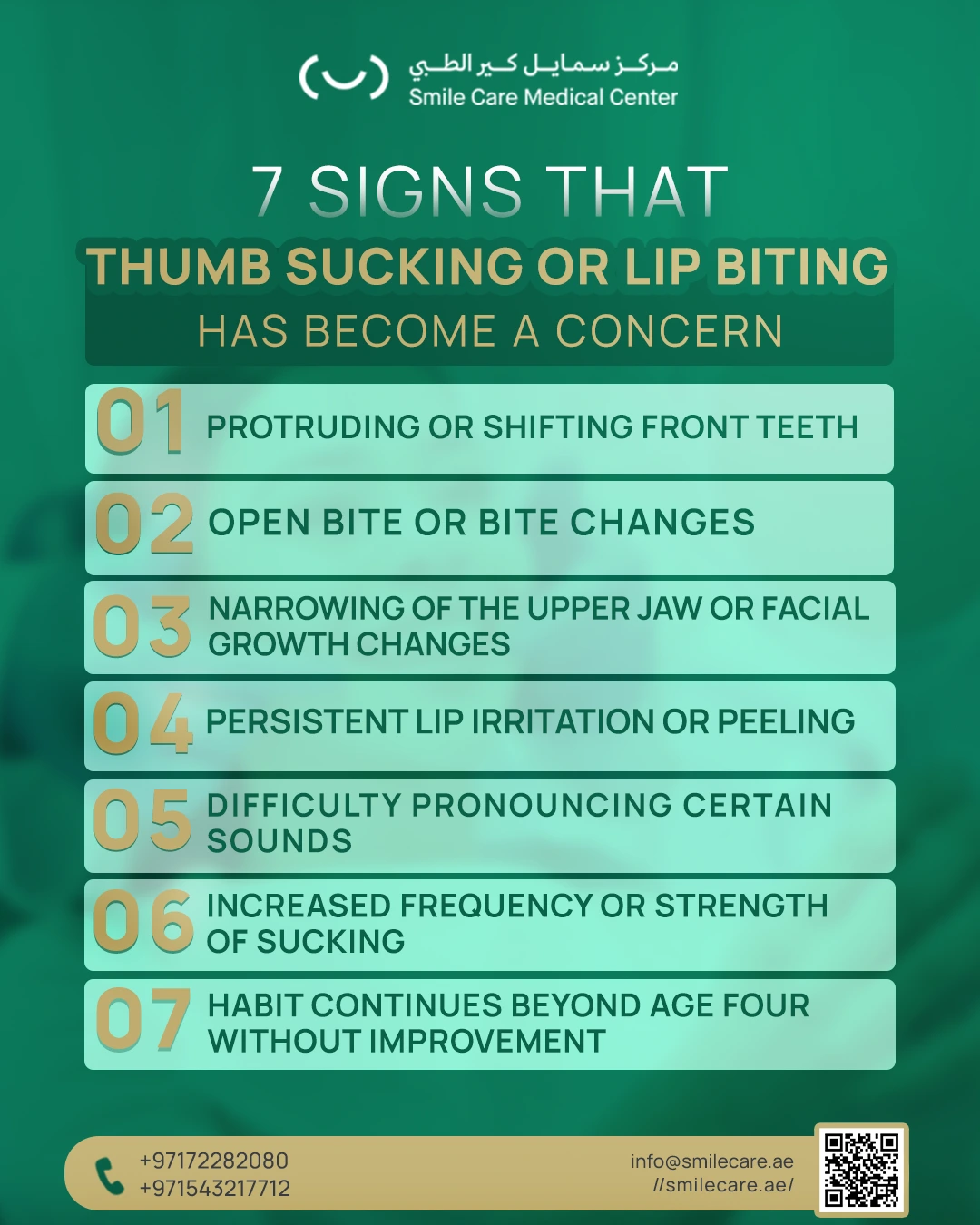
7 Signs That Thumb Sucking or Lip Biting Has Become a Concern
When these habits continue beyond
early childhood, certain warning signs may suggest that dental or developmental changes are beginning. Parents should pay attention to the following:
- Front teeth starting to protrude or shift position
- Appearance of an open bite or changes in how the teeth meet.
- Narrowing of the upper jaw or changes in facial growth.
- Persistent lip irritation, redness, or peeling.
- Difficulty pronouncing certain sounds or early speech changes.
- Increased frequency or stronger sucking pressure over time.
- Habit continuing past age fou
r with no signs of improvement.
If you want to learn more about harmful oral habits, their treatment, and how to protect your child’s teeth and gums, you can visit our Dental clinc page at Smile Care Medical Center.
What Parents Can Do to Help Break the Habit
With the right approach, most children can successfully stop thumb sucking or lip biting without stress. Parents can support their child using gentle, consistent strategies, including:
- Encouraging positive behavior with praise or small rewards.
- Identifying emotional or situational triggers, such as fatigue or stress.
- Offering alternatives like reading, drawing, or comfort activities.
- Using gentle verbal reminders without criticism or pressure.
- Consulting a pediatric dentist if the habit persists or becomes stronger.
Smile Care dentists recommend using gentle reminders and positive reinforcement rather than pressure or punishment, as supportive approaches are more effective in helping children break the habit.
Treatment Options if the Habit Persists
If thumb sucking or lip biting continues despite supportive strategies at home, a pediatric dentist may recommend additional interventions to protect proper oral development. These options include:
- Applying safe, mild bitter solutions to discourage thumb sucking.
- Using small thumb bandages or light overnight coverings.
- Introducing Myobrace appliances to guide oral muscles and improve habits.
- Using a palatal crib appliance to prevent thumb placement and break chronic habits.
- Scheduling regular follow-ups to monitor tooth and jaw development.
When to See a Pediatric Dentist?
Parents should consider a pediatric dental evaluation if the habit continues past age four or if any changes in tooth alignment, speech, or lip health begin to appear.
A dentist can assess the severity of the habit, identify early signs of developmental impact, and recommend the most appropriate interventions. Early guidance often prevents long-term complications and helps children break the habit more easily and confidently.
According to the World Health Organization (WHO), early dental visits and routine monitoring are essential for identifying developmental issues linked to persistent oral habits.
Frequently Asked Questions (FAQ)
Here are the most common questions people ask about thumb sucking and lip biting in children:
How can I gently help my child stop thumb sucking or lip biting?
Start with gentle, positive strategies: praise your child when they avoid the habit, use small rewards, identify triggers like stress or fatigue, and offer alternatives such as reading, drawing, or cuddling. Avoid shaming or punishment, and use calm reminders instead. If these steps are not enough, a pediatric dentist can provide additional tools and guidance.
Can thumb sucking and lip biting damage my child’s teeth?
Yes, if thumb sucking and lip biting in children are frequent, long-lasting, and intense, they can push the front teeth out of position, create an open bite, and even narrow the upper jaw. These changes may affect chewing, speech, and facial balance, which is why early monitoring is important.
Thumb sucking and lip biting in children are common habits, yet they can become concerning when they continue past age four or start affecting tooth alignment, speech, or lip health. Recognizing early changes helps parents act before long-term issues develop.
Gentle home strategies, combined with timely guidance from a pediatric dentist, offer the most effective approach to breaking the habit while supporting healthy oral and facial development.
A healthy smile starts with early habits.
Protect your child’s teeth and jaw growth at Smile Care Medical Center with gentle, specialized care for thumb sucking and lip biting in children. Book your appointment now, or contact us via WhatsApp for quick answers to your questions.
Sources and References
-
UAE Ministry of Health and Prevention (MOHAP) – Provides guidelines on oral health and prevention of gum disease.
-
World Health Organization (WHO) – Offers best practices for oral health assessment and gum care.
-
American Dental Association (ADA) – Expert recommendations on gum and dental care, and infection prevention.


